Twice Seen, Twice Admired: The Quiet Authority of Repeating Your Finest Pieces
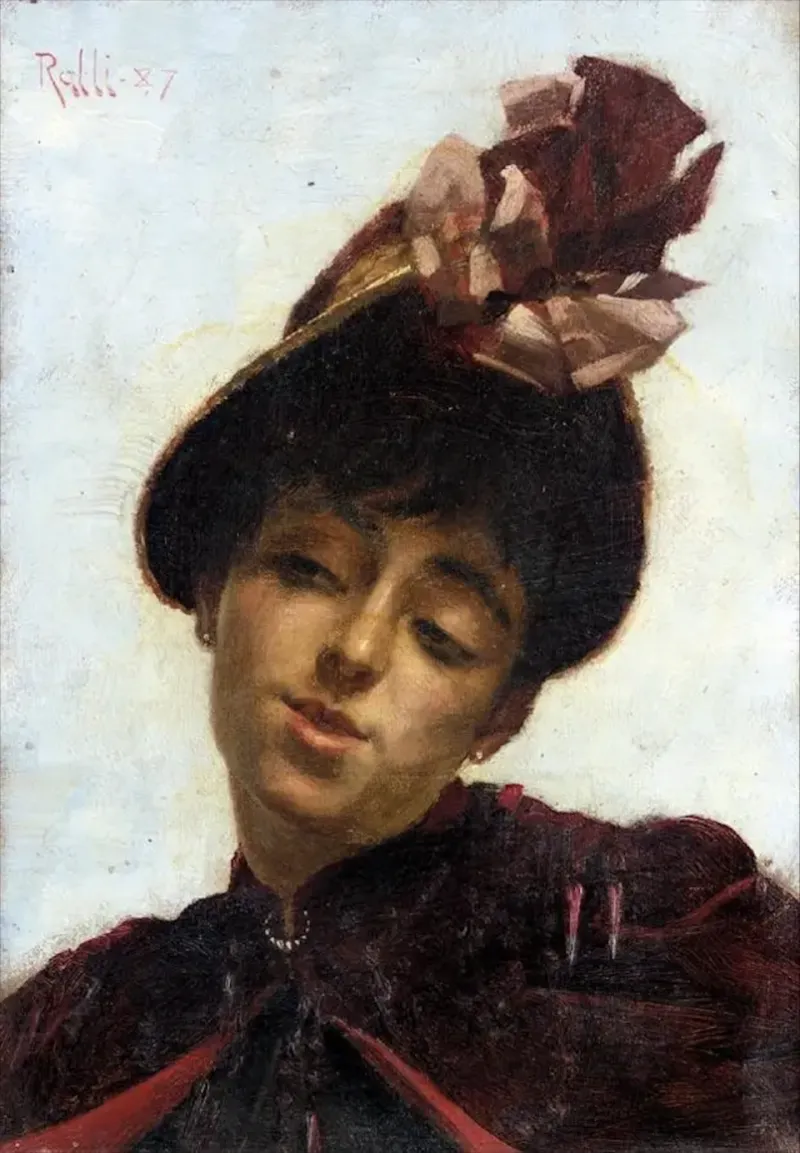
Photo: Théodore Ralli, Public domain, via Wikimedia Commons
There is a peculiar anxiety peculiar to our era: the fear of the repeat. Somewhere between the rise of the outfit post and the quiet tyranny of the tagged photograph, a new rule was written into the social contract—one wear, one audience, one moment. A gown worn twice became a subject of commentary; a coat photographed on consecutive occasions, a small scandal.
We would like to state, plainly and without apology, that this rule is nonsense.
The Invention of the Single Wear
For most of modern history, the opposite was true. A woman of means was known by the constancy of her wardrobe. Jacqueline Kennedy's sun glasses, her flat hats, her particular shade of camel—these appeared season after season, and the repetition did not diminish her; it defined her. The pieces one returns to are, by definition, the pieces that work. Discarding them after a single outing is not elegance. It is churn.
The pressure to never repeat is, at its core, a pressure to consume. It flatters the algorithm and the retailer in equal measure, and it quietly suggests that a wardrobe is a performance for an audience rather than a resource for a life. The elegant woman declines this premise entirely.
Repetition as Refinement
Consider what actually happens when a treasured garment appears again. A wine-colored velvet blazer worn to a December dinner in Boston reappears in March over a white poplin shirt at a gallery opening in Chelsea. The same ivory silk blouse anchors a client lunch in one week and a Sunday brunch the next. Each reappearance is not a rerun—it is a second reading of a text worth rereading.
Styling does the work. Change the trouser from wide to slim. Swap a pump for a loafer, a pearl for a cuff. Let the piece be worn open, belted, collar up, collar down. A truly great garment is a stage, not a costume; the scene changes around it.
There is also a subtler signal at play. When an executive wears the same impeccably cut jacket to three consequential meetings in a month, she is communicating something no new purchase could: this is who I am, and I do not require novelty to prove it. Repetition, styled well, reads as authority. It says the wearer has already done the work of deciding.
The Signature Piece, Across a Season
The most stylish hosts and tastemakers we know practice a kind of deliberate recurrence. One signature piece—a coat, a dress, a jewel—is worn deliberately through a season of occasions, each time recontextualized.
The method is simple:
- Anchor, don't accessorize. Let the signature piece be the constant; everything around it moves.
- Vary the register. Pair it once with denim and once with evening satin to demonstrate its range.
- Allow the patina of familiarity. By the third appearance, the piece is no longer an outfit. It is a characteristic.
The Real Flex
In a culture that mistakes newness for richness, the power move is inversion. To be photographed in the same beautiful coat twice—and to be entirely unbothered—is a statement of security that no shopping bag can replicate. It announces a wardrobe built on intention rather than impulse, and a woman who answers to her own standards.
Wear it again. Wear it better. That is the season's most elegant instruction.