The True Cost Equation: A Framework for Evaluating Luxury Fashion as Investment
There is a particular kind of buyer who confuses expense with value. They are drawn to a high price tag as though the number itself confers distinction, acquiring pieces that announce their cost without ever justifying it. The truly elegant consumer operates from an entirely different premise—one grounded in an understanding that price is merely the entry point to a far more nuanced conversation about worth.
Building a wardrobe of genuine investment pieces requires not just taste but analytical rigor. It demands that the discerning dresser ask harder questions, resist the seduction of novelty, and develop a framework sophisticated enough to evaluate what a garment will mean not just today but across the years of its ownership.
Redefining Value: The Cost-Per-Wear Principle
The most useful initial tool in evaluating any luxury purchase is the cost-per-wear calculation—a straightforward division of the purchase price by the number of anticipated wearings. A $1,200 cashmere overcoat worn forty times a year across fifteen years of active use represents a cost of approximately $2 per wearing. A $400 trend-driven piece worn eight times before obsolescence costs $50 per wearing.
This arithmetic, while simple, is revelatory. It reframes the conversation from the shock of an initial outlay to the genuine economy of considered acquisition. Pieces that appear extravagant at purchase often prove to be the most financially rational choices when measured against the full arc of their usefulness.
The cost-per-wear principle also encourages a different relationship with one's wardrobe. When each piece represents a considered investment rather than an impulse, the tendency to over-acquire diminishes naturally. Quality crowds out quantity not through discipline but through logic.
The Hidden Economics of Craftsmanship
Luxury pricing is frequently misunderstood, even by those who regularly participate in the market. A significant portion of what one pays for a genuinely well-made garment reflects costs that are invisible at the point of sale: the time invested by skilled artisans, the provenance of raw materials, the infrastructure required to maintain traditional construction methods that resist mechanization.
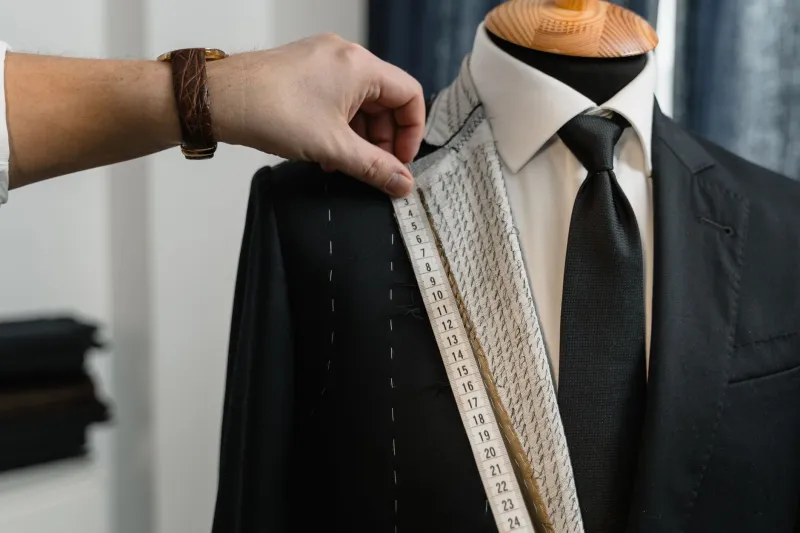
A hand-stitched buttonhole, for instance, requires approximately forty minutes of skilled labor. A canvassed suit jacket—one in which the internal structure is built from layers of horsehair canvas that gradually mold to the wearer's body—demands construction techniques that cannot be replicated by machine. These details do not announce themselves. They reveal themselves over time, in the way a garment holds its shape, in the way it responds to the body, in the way it ages.
Understanding this hidden economy transforms how one approaches a luxury purchase. The question shifts from "Is this worth the price?" to "Do I understand what I am paying for?" The latter is the more intelligent inquiry, and it is the one that separates the educated consumer from the merely affluent one.
Ethical Production as Investment Criterion
The contemporary luxury market has introduced a dimension of evaluation that previous generations of elegant consumers did not need to navigate with the same urgency: the ethics of production. Increasingly, the long-term value of a luxury piece is inseparable from the conditions under which it was made.
Brands with verifiable commitments to fair labor practices, environmental responsibility, and supply chain transparency tend to command sustained market confidence. Their pieces hold value not only because of superior construction but because the story they carry remains one of integrity. Conversely, luxury goods produced under ethically compromised conditions carry a reputational liability that can erode their perceived value over time—both culturally and, increasingly, in resale markets.
For the discerning American consumer, factoring ethical production into the investment calculus is no longer a peripheral concern. It has become central to what it means to purchase with genuine discernment.
Resale Value and the Secondary Market
The resale market for luxury fashion has matured dramatically over the past decade, evolving from a niche activity into a sophisticated secondary economy with its own pricing structures, authentication standards, and demand cycles. Platforms dedicated to authenticated pre-owned luxury goods now provide a level of price transparency that allows buyers to assess the resale trajectory of a piece before acquiring it new.
Certain categories have demonstrated consistent resale strength: classic handbags from heritage houses, watches with established collector communities, and iconic ready-to-wear pieces from designers with enduring cultural authority. Understanding which categories hold value—and why—allows the investment-minded buyer to make acquisitions that function as genuine assets rather than depreciating expenses.
This does not mean purchasing exclusively with resale in mind; that approach tends to produce a wardrobe that feels more like a portfolio than a personal expression. Rather, awareness of the secondary market serves as a useful corrective to impulse, a check against acquiring pieces whose appeal is entirely seasonal.
Distinguishing Investment from Expensive Impulse
Perhaps the most important skill in luxury fashion evaluation is the ability to distinguish a genuine investment piece from what might be called an expensive impulse—a high-priced acquisition driven by desire rather than discernment.
The markers of a genuine investment piece are consistent: it is executed in materials of verifiable quality; its construction will be as sound in fifteen years as it is today; its design draws from a tradition deep enough to resist obsolescence; and it integrates naturally with existing pieces rather than demanding an entirely new wardrobe context.
An expensive impulse, by contrast, often announces itself through the excitement it generates at the moment of consideration—an excitement that rarely survives honest reflection. The test of time is the only reliable filter, which is why the most experienced luxury consumers cultivate the habit of waiting. A piece that commands the same desire after thirty days of consideration is a piece worth acquiring.
The Discipline of the Considered Purchase
Ultimately, the investment principle in luxury fashion is less a financial strategy than a philosophical one. It reflects a particular relationship with material culture—one in which objects are chosen for their capacity to endure, to improve with age, and to carry meaning across the years of their ownership.
The truly elegant consumer understands that the most powerful statement a wardrobe can make is not one of abundance but of certainty. Each piece chosen with genuine care becomes evidence of a sensibility that cannot be purchased in a single transaction. It is assembled, slowly and deliberately, over a lifetime of educated choices.