Dressed in Silence: The Quiet Craftsmanship Behind Fashion's Most Expensive Simplicity
There is a particular kind of confidence required to wear a plain white shirt to an important occasion. No pattern to draw the eye, no embellishment to invite admiration, no dramatic silhouette to justify the investment. Just fabric, cut, and the person wearing it. And yet, in the current landscape of American luxury fashion, that plain white shirt—the right one—may be the most powerful garment in your wardrobe.
The shift from maximalism to architectural restraint did not happen overnight. For decades, luxury fashion communicated its status through visible excess: layered embroidery, ostentatious hardware, logos scaled to be read from across a room. The message was clear, and intentionally so. But something has changed in the sensibility of the truly discerning consumer. Today, the most coveted pieces are often the ones that reveal their worth only to those who know precisely where to look.
The Architecture of a Perfect Garment
To understand why a cashmere turtleneck from a heritage atelier costs ten times more than a superficially similar version from a mass-market retailer, one must first abandon the instinct to evaluate clothing by what is immediately visible. Luxury minimalism is, by its very nature, an exercise in concealment—of effort, of complexity, of the extraordinary skill required to make something look effortless.
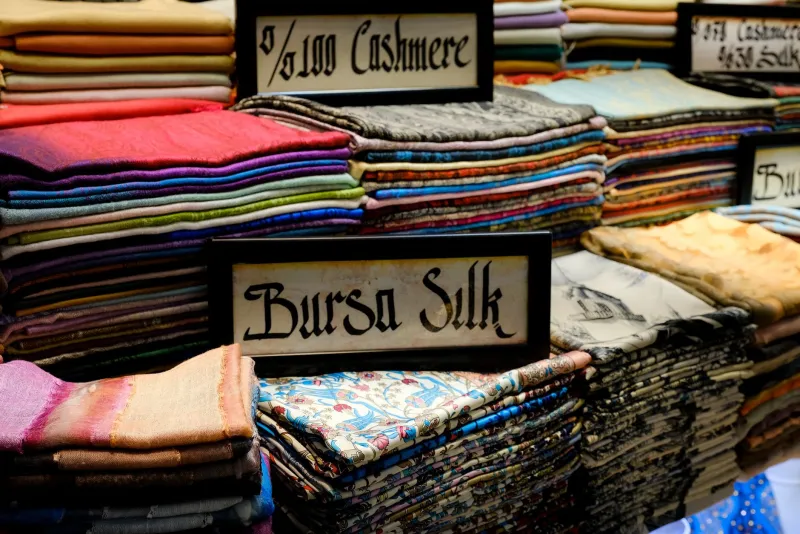
Begin with the fabric itself. A white broadcloth shirt at the higher end of the market is likely woven from two-ply cotton with a thread count that gives the cloth a subtle luminosity, a weight that holds its shape without stiffness. Hold it to the light. Lesser fabrics appear flat; quality cloth has a quiet depth to it, a dimensional quality that photography rarely captures. Run it between your fingers. Genuine luxury fabric resists the hand—it has body—while simultaneously feeling like a second skin.
Then consider the construction. The interior of a garment tells its true story. Hand-felled seams, where the allowance is turned and stitched by hand to lie completely flat, are a mark of couture-level investment that no machine can replicate with the same finesse. Look for pick-stitching along lapels—tiny, even stitches placed by hand that allow a blazer's edge to roll rather than fold. Examine the button placement. Are the buttons sewn with a thread shank that allows them to pass through the buttonhole without straining the fabric? These details cost time, and time, in fashion as in everything, costs money.
Why Simplicity Demands More, Not Less
The counterintuitive truth of minimalist luxury is that it places far greater demands on the maker than ornamentation does. A beaded gown can forgive an uneven hem; the beading draws the eye away. An embroidered jacket conceals the quality of its underlying construction beneath layers of decorative distraction. But a perfectly cut blazer in a solid charcoal wool—that garment has nowhere to hide. Every seam must be precise. The shoulder must fall exactly where the shoulder falls. The lapel must roll with a natural grace that no amount of pressing can manufacture into a poorly made piece.
This is why the ateliers that specialize in what the industry sometimes calls "quiet luxury" are staffed by some of the most technically accomplished tailors and seamstresses in the world. The work is not less demanding because the result looks simple. It is more demanding, precisely because the result must appear inevitable.
American consumers are increasingly attuned to this distinction. The pandemic years accelerated a broader reckoning with what we actually wear, what we actually need, and what actually holds its value. Investment in a handful of exceptional pieces—a well-constructed blazer, a silk blouse cut on the bias, a trouser with a proper rise and break—began to feel not only more sophisticated but more rational than assembling a wardrobe of trend-driven pieces that would look dated within two seasons.
Learning to See What Is Not There
Developing an eye for understated quality is a skill, and like all skills, it improves with deliberate practice. The next time you are considering a significant wardrobe investment, resist the impulse to evaluate the piece at arm's length. Examine it as you would a piece of fine jewelry.
Turn the garment inside out. The interior lining—if present—should be cut on the same grain as the outer fabric, ensuring that both layers move together rather than pulling against each other. In an unlined jacket, the interior seams should be finished with a Hong Kong finish or a clean fell, not merely serged. Serging is efficient; it is not elegant.
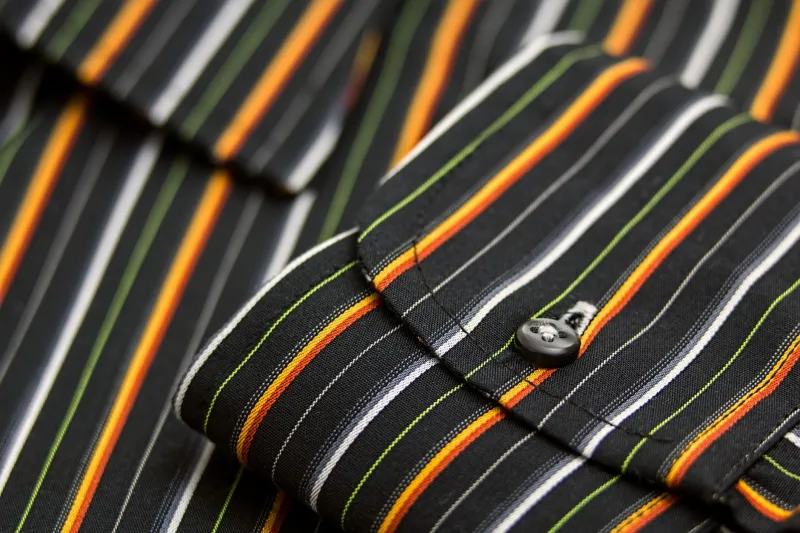
Evaluate the pattern matching. On a striped or plaid fabric, the stripes should meet at every seam—across the chest pocket of a blazer, along the side seams of a trouser. This requires more fabric and more time in cutting. It is a reliable indicator of a house that does not cut corners, in any sense of the phrase.
Finally, consider the hardware and closures. Buttons should be natural materials—horn, mother of pearl, corozo—rather than plastic. They should be attached with a thread shank and a backing button on the interior to prevent the fabric from tearing under repeated use. Zippers, where present, should glide without resistance and be set with a clean, even topstitch.
Investing in Silence
The financial case for minimalist luxury is, in the long run, a compelling one. A well-constructed blazer in a classic silhouette—single-breasted, notch lapel, in a neutral wool—will not look dated in five years, or ten, or twenty, provided it is maintained properly. The same cannot be said for a heavily embellished piece that reflects a particular seasonal mood.
This is the true economy of restraint: you are not paying for less. You are paying for permanence. The absence of ornamentation is itself a form of commitment—to craft, to longevity, and to a standard of dress that does not require external validation to feel complete.
In a culture that has grown accustomed to clothing as spectacle, choosing silence is its own statement. And for those who have learned to read it, it speaks volumes.