Beyond the Register: How a Skilled Tailor Completes What the Designer Began
There is a moment, familiar to every well-dressed woman, that happens quietly and without ceremony: the purchase is made, the bag is carried to the car, and the garment — already lovely — is considered finished. It is precisely at this moment that the truly elegant diverge from the merely well-dressed. For them, the purchase is not an ending but an invitation. The real work begins at the tailor's.
The Off-the-Rack Illusion
Ready-to-wear exists for a reason, and no one at FA Elegance would argue against its conveniences. But the sizes hanging on American racks are built to fit a statistical average — a woman who, in truth, does not exist. Shoulders are cut for one proportion, sleeves for another, and hemlines are set to a length that flatters no one in particular.
The consequence is that most garments, as purchased, fit approximately. And approximation is the enemy of elegance. A blazer that gaps at the bust, trousers that pool at the ankle, a dress whose waist sits a half-inch too low — each is a small, visible surrender. Alterations resolve what the rack cannot. They convert a garment manufactured for thousands into one made, effectively, for one.
Finding Your Specialist
Not every tailor is equal, and the search deserves the same rigor you would apply to a dermatologist or a colorist. A few principles guide the hunt:
- Ask the best-dressed women you know. Personal referral remains the most reliable instrument. The woman whose coat sleeves always fall exactly right has a name in her phone.
- Start small. Bring a hem or a button reattachment before you trust anyone with a wool coat. Skill reveals itself in the modest jobs.
- Look for consultation, not just execution. A master tailor will tell you when a garment cannot be successfully altered — and will decline the work. That honesty is worth more than any single seam.
- Expect conversation about structure. Someone who discusses shoulder pads, seam allowances, and fabric behavior is someone who understands garments, not just machines.
In most American cities, the finest practitioners are found not in glossy shopping districts but in unassuming storefronts near business cores — often family businesses in their second or third generation, frequently with roots in the sartorial traditions of Italy, Vietnam, Korea, or Greece. Seek them out.
What Deserves the Needle
Alterations cost money, and discernment means knowing where the investment returns. As a general architecture:
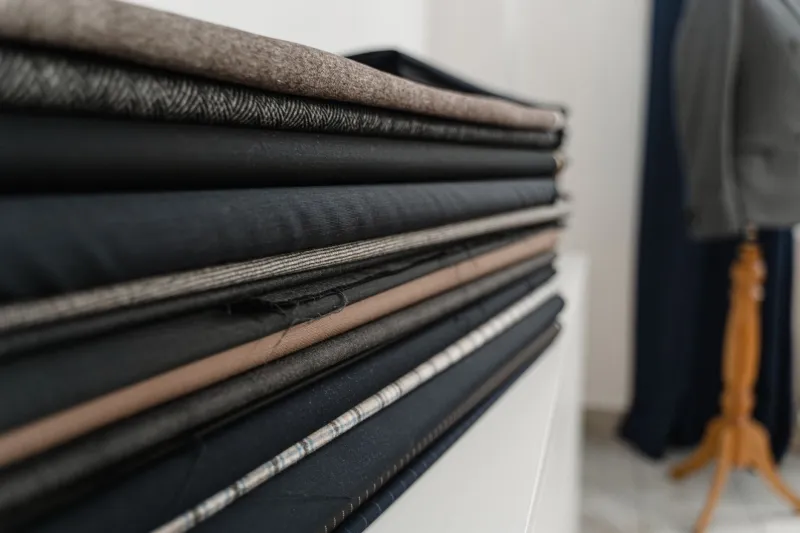
Always tailor: blazers and structured jackets, trousers and denim you wear weekly, wool coats, evening wear, and anything in fine suiting. These are silhouette-defining pieces; a poor fit here undermines everything else.
Occasionally tailor: silk blouses (a narrowed side seam works wonders), sheath dresses, and knitwear worth salvaging.
Rarely worth it: inexpensive synthetics, fast-fashion pieces, and garments where alteration costs would exceed a third of the purchase price. Let these go gracefully.
A useful benchmark: budget roughly ten percent of a garment's cost for tailoring. A $600 blazer that becomes a $660 blazer with shoulders that finally belong to you is a bargain. A $60 dress requiring $75 of work is a lesson, not an investment.
The First Fitting and the Second
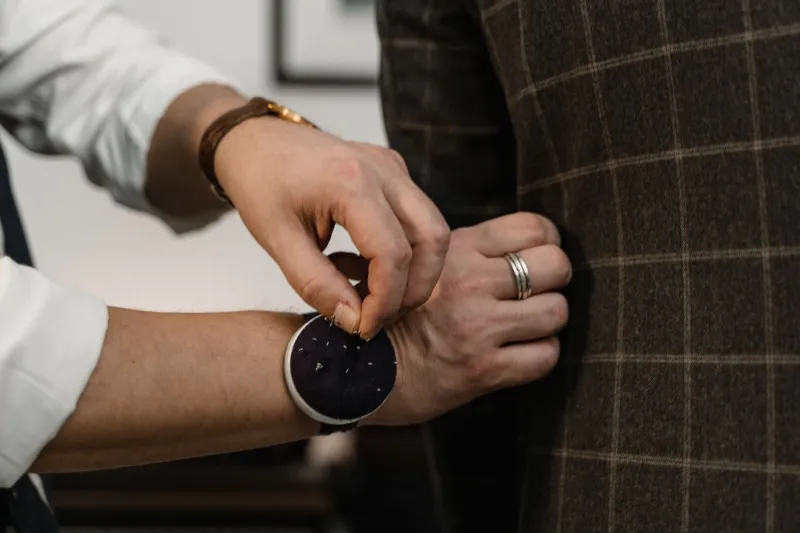
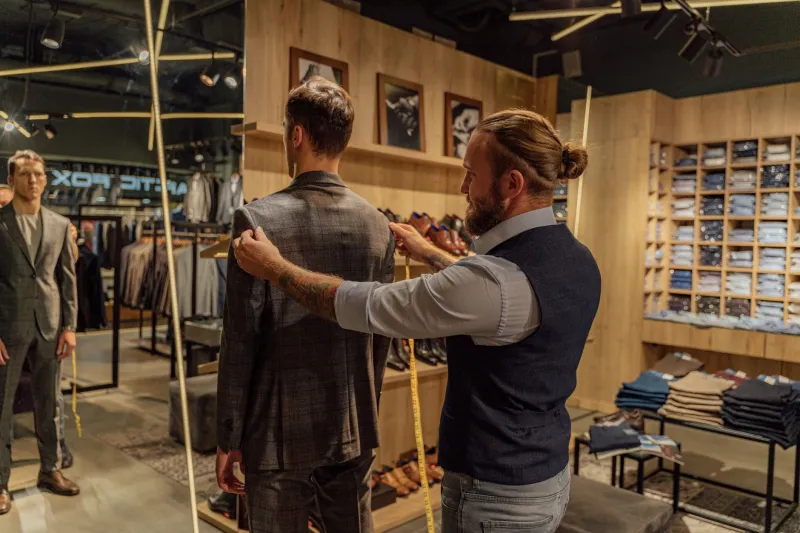
Understand that serious alterations involve two appointments. At the first, the tailor pins and marks while you stand as still as patience allows; the garment leaves, is dismantled and rebuilt, and returns for the second fitting, where fine adjustments are made. Bring the shoes you intend to wear with the piece. Wear the undergarments appropriate to it. These small preparations are the difference between a good alteration and a great one.
Build in time, too — a week is standard, longer before a significant event. The elegantly dressed do not ask tailors to rush; they ask tailors to care.
The Quiet Dividend
What alterations ultimately purchase is not merely fit but authority. A garment that fits precisely moves differently, drapes differently, and is worn differently — with a confidence that no logo can supply. People will not always be able to name what distinguishes you. They will simply notice that your clothes look as though they were made for you.
Because, in the end, they were. The designer began the sentence; the tailor finished it. The most elegant women in America have simply learned to let both do their work.