When More Becomes Less: The Silent Failure of Luxury's Loudest Voices
There is a peculiar anxiety at work in the most ostentatious corners of contemporary luxury fashion. It announces itself in the form of logo-saturated outerwear, in runway collections that seem to compete with their own noise, in the relentless expansion of brand universes into every conceivable product category. What presents itself as confidence is, upon closer examination, something considerably more fragile: the need to be seen, validated, and recognized at every turn.
True elegance has never required that kind of reassurance.
The Grammar of Restraint
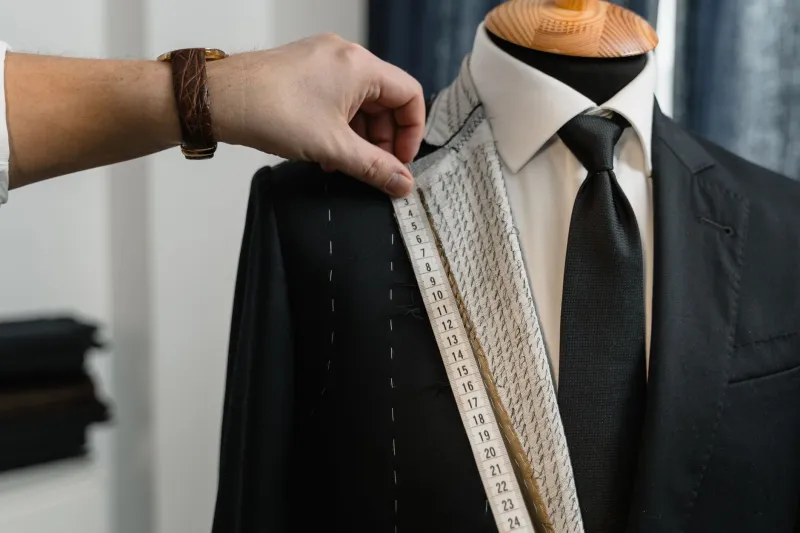
The houses that have maintained genuine prestige across generations share a defining characteristic — they understand silence as a design principle. Consider the architecture of a Loro Piana coat: no visible branding, no decorative excess, only the extraordinary weight and drape of vicuña or cashmere speaking entirely for themselves. The garment does not ask to be identified. It simply exists, and in that self-possession lies its authority.
This is not accidental minimalism. It is a deliberate philosophy rooted in the understanding that scarcity — of ornamentation, of explanation, of visibility — creates desire more effectively than saturation ever could. When a house trusts its craftsmanship enough to let the work speak without amplification, it communicates something that no logo can: absolute confidence in its own worth.
The contrast with brands that have chosen the opposite path is instructive. Several heritage houses, under pressure to capture younger demographics and expand revenue streams, have pursued what the industry euphemistically calls "accessibility" — broader product lines, more visible branding, collaborations designed to generate social media volume. The short-term results may be commercially legible, but the longer-term consequence is a dilution of the very mystique that made those houses worth pursuing in the first place.
Excess as Confession
Maximalism in luxury fashion is rarely as joyful as its practitioners suggest. More often, it is a response to a specific kind of cultural anxiety: the fear that subtlety will be overlooked, that refinement will go unrecognized, that understatement will be mistaken for poverty of imagination or means.
This anxiety is, in a sense, understandable. In an American consumer culture increasingly mediated by social platforms that reward the immediately legible and visually emphatic, the quiet gesture is genuinely at risk of being lost. A garment that requires knowledge to appreciate — that reveals its quality only to the initiated — cannot compete, on those terms, with something that announces itself in an Instagram caption.
But luxury fashion's most enduring customers are not shopping for captions. They are investing in objects and experiences that will retain their meaning outside the scroll. And for that audience, excess reads precisely as it is: a lack of conviction.
The paradox is this — the louder a luxury house shouts about its own worth, the more it reveals its doubt about that worth. Genuine authority does not seek permission.
Case Studies in Divergence
The divergence between restraint and spectacle can be traced across the modern histories of several major houses, though the pattern repeats with remarkable consistency.
Hermès stands as perhaps the clearest example of a house that has resisted the temptation to over-explain itself. Its product categories remain tightly controlled, its branding visible but never overwhelming, its collaborations carefully considered rather than opportunistically pursued. The result is a brand whose waiting lists are not a marketing tactic but a genuine function of limited production — and whose pieces appreciate in value precisely because they are never ubiquitous.
By contrast, houses that have pursued aggressive logo visibility and product proliferation — particularly in the accessible luxury tier — have found that what they gained in recognition they lost in aspiration. When a brand's aesthetic becomes shorthand for a particular moment in social media culture, it acquires a timestamp. Timestamped luxury is, by definition, not timeless.
A Framework for the Discerning Consumer
For the style-conscious American consumer navigating this landscape, the challenge is developing a framework for distinguishing authentic luxury from its performative imitation. Several questions prove useful.
Does the piece require context to be appreciated? Genuine luxury often reveals itself gradually — in the hand, in the wear, in the construction details that become apparent only with proximity. A garment that must be immediately identified to be valued is dependent on recognition rather than quality.
Is the brand expanding or editing? Houses that continuously introduce new product categories, brand extensions, and licensing arrangements are typically prioritizing revenue over legacy. Those that resist expansion in favor of deepening mastery of a defined craft tend to be the ones worth watching.
What is the resale narrative? Pieces from houses that maintain restraint tend to hold or appreciate in value over time. This is not merely a financial consideration — it is evidence that the market consistently rewards genuine quality over spectacle.
Does wearing it require explanation? The most refined pieces occupy a paradoxical space: they are recognizable to those with genuine knowledge and entirely invisible to those without it. This is not exclusivity for its own sake — it is the natural consequence of designing for connoisseurs rather than for audiences.
The Enduring Argument for Quietude
There is something almost countercultural, in the current moment, about choosing restraint. To dress in a manner that does not seek immediate recognition, to invest in pieces whose value is legible only to the informed eye, to resist the temptation of the conspicuous — these are not passive choices. They are active assertions of a particular set of values.
The most enduring figures in American style history — from the studied simplicity of Katharine Hepburn to the architectural precision of contemporary figures who favor a tightly edited wardrobe — have understood that the goal of dressing well is not to be noticed. It is to be remembered.
Luxury fashion's loudest moments are, almost invariably, its most forgettable ones. The pieces that endure, that pass between generations, that accumulate meaning rather than merely accumulating attention, are almost always the ones that chose silence over spectacle.
In that choice lies everything.